

1. James Fenimore Cooper House
Address: 475 High St, Burlington, NJ
Built in the late 18th century, this brick Federal-style home is associated with
James Fenimore Cooper, author of The Last of the Mohicans, who spent part of his youth in Burlington.
The refined architectural style reflects Burlington’s early prosperity as a Delaware River port town. It was included for its
connection to one of America’s most influential literary figures and the city’s cultural legacy.
2. Thomas & Mary Evans Home
Address: 123 S Elmwood Rd, Pine Grove (Evesham Township), NJ
Located in Pine Grove, a census-designated area within Evesham Township, this 19th-century farmhouse reflects the agricultural roots of eastern Burlington County. Thomas and Mary Evans were part of the region’s early farming families, whose labor shaped the rural landscape long before suburban growth.
The home was included as a representative example of vernacular farm architecture and everyday historic life.
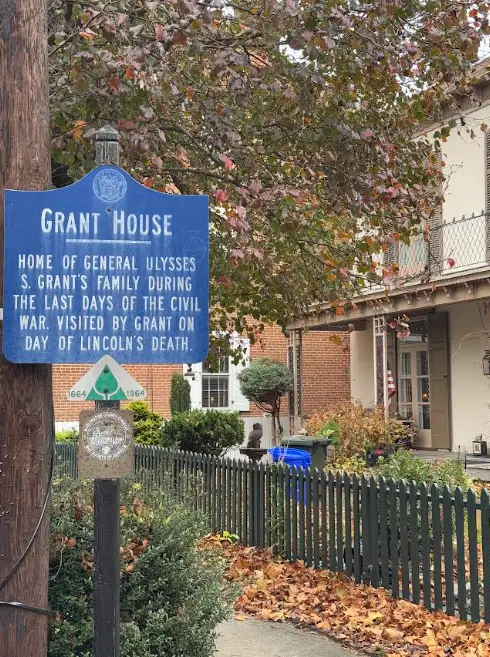
3. Grant House
Address: 309 Wood St, Burlington, NJ
Dating to the mid-1800s, this home served as a vacation residence for General Ulysses S. Grant.
Historical accounts indicate Grant was traveling to Burlington when Abraham Lincoln was assassinated in April 1865, abruptly changing his plans.
The house is included for its association with a pivotal national figure and its connection to one of the most consequential moments in U.S. history.
4. John Inskeep House (1771)
Address: 70 N Locust Rd, Marlton, NJ
Built in 1771, this colonial-era farmhouse is among the oldest surviving structures in Marlton.
The Inskeep family were early settlers in what was once a rural farming community. Its age, simple construction, and continued
presence make it a rare physical link to pre-Revolutionary life in Burlington County.
Together, these homes remind us that history lives not just in grand landmarks—but in the houses woven into the fabric of our communities.